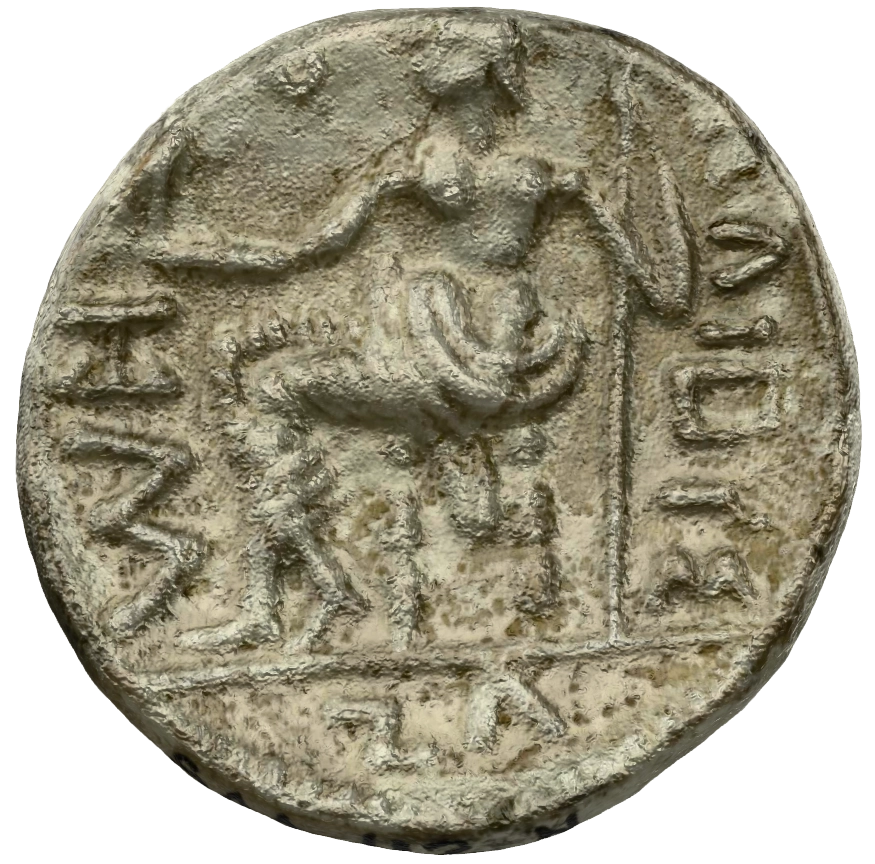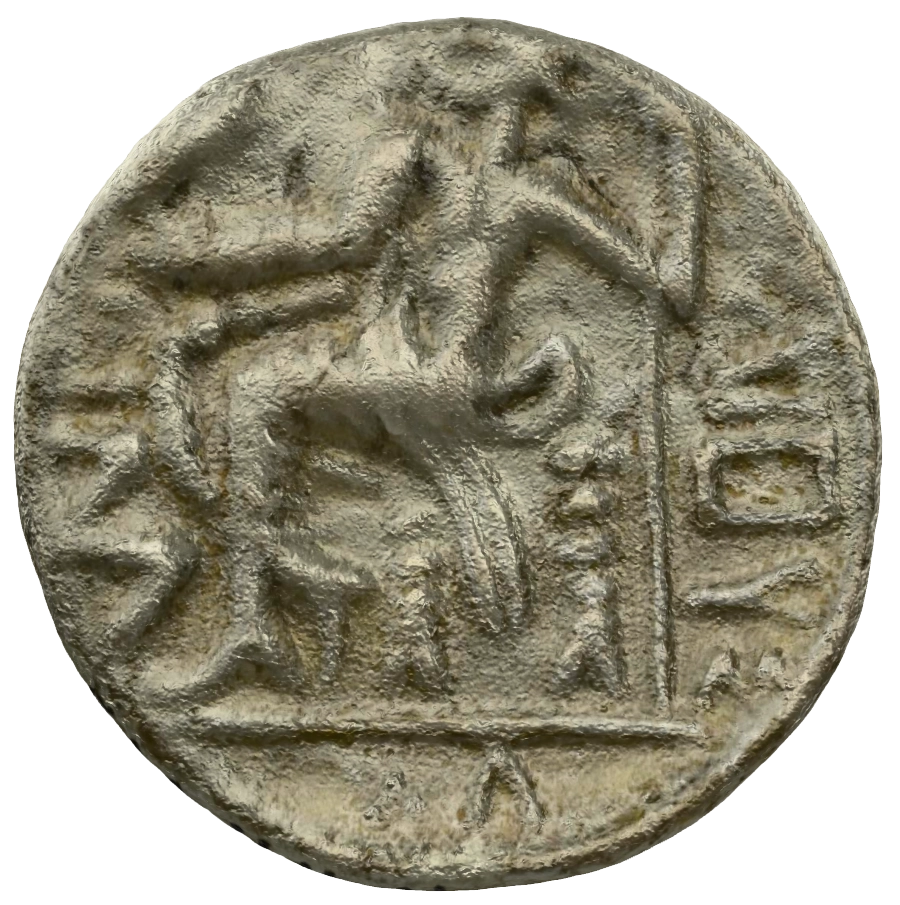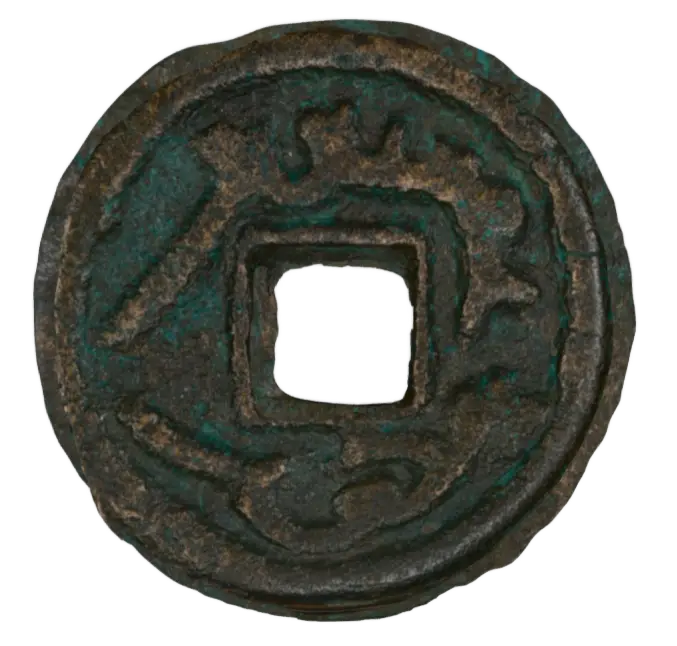
“Kaiyuan tongbao” spread in Central Asia mainly in Semirechye Region (modern Kyrgiz Republic). And this is the key why the situated there Turgesh kaganate started to cast Chinese type bronze coins, following the standard of “Kaiyuan tongbao” [Rtveladze 1987, p.176-181; Rtveladze 2002, p.48-52]. One of the examples of them are coins by king Wahshutawa, c.730 [Kamyshev 2002, No.28]. However, such Chinese-influenced local coins production also spread to Samarkand and was used by its Ihshid rulers, like those by king Tarkhun, c.700-710 [Smirnova 1981, No.518; O’zbekistao 2018, p.263-264; Thierry 2011, p.413-442] The obverse contains Sogdian inscription with the name of the king, and reverse – a tamga mark. This type of coins is found in Semirechye (Kyrgyzstan) and in Uzbekistan [Rtveladze 1987, p.180-181] Gurek or Gurak (Sogdian Wγrk) was one of the last ichshids (rulers) of Sogdiana and the afshin (ruler) of Samarkand during the period of the Muslim conquest of Central Asia. In 710, he ascended the throne as ruler of Sogdiana after his predecessor Tarhun was removed from power by the Samarkand nobility for yielding to the Arabs. As is known from Chinese sources, after his death the kingdom was divided between his relatives Tu-ho- Prince Kabudkhan received Samarkand, Me-chuo became the king of Mayamurg, and a certain Ko-lopu-lo (who may have been Gurek’s brother Afarun) became the king of Ishtykhan in 742.